Designers who build: how modern teams ship faster and better
Designers who build help founders and VPs ship faster with fewer handoff gaps by connecting product, engineering, marketing, and execution in one loop.
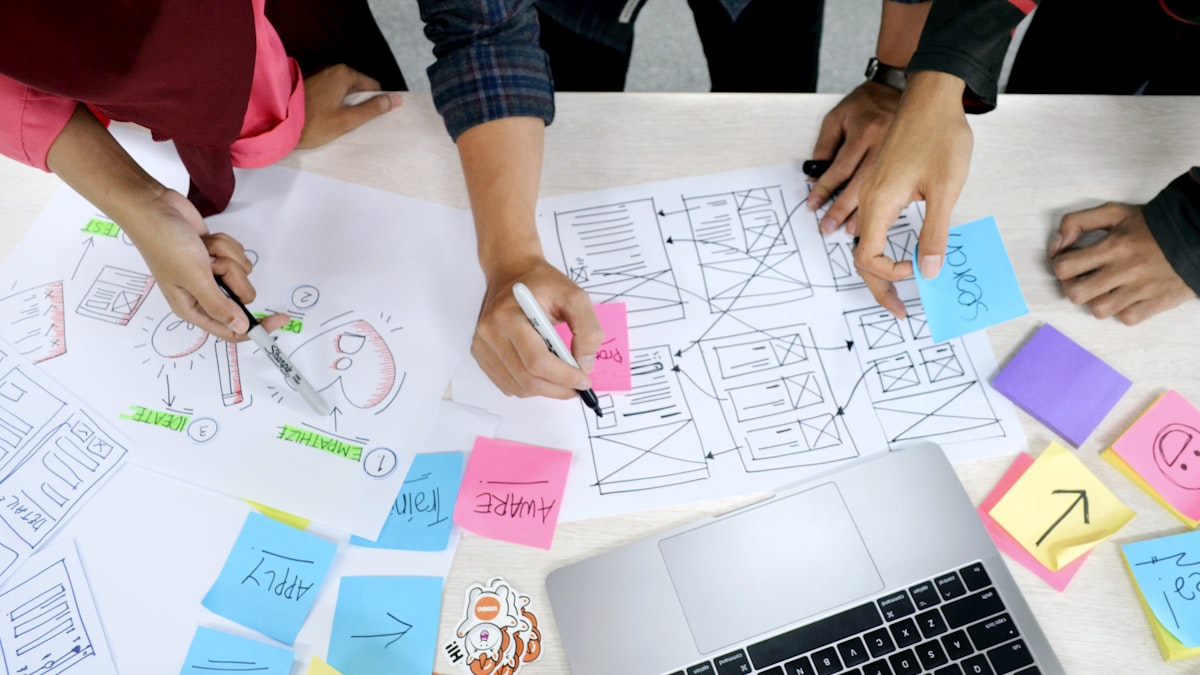
The future belongs to designers who build. Not because every designer needs to become a full-time engineer, and not because visual craft matters less. The shift is that product teams no longer reward isolated excellence. They reward integration. A designer who can move between interface decisions, implementation constraints, cross-functional communication, and business outcomes becomes a leverage point for the company.
That is the practical difference this post focuses on: designers who build help teams ship faster with fewer interpretation gaps. They reduce handoff loss, raise decision quality, and make collaboration across engineering, product, and marketing much more concrete. For founders, that translates into speed and confidence. For VPs, it translates into delivery reliability and cleaner execution.
Why this matters now
The old model was linear. Product strategy happened in one room, design happened in another, engineering interpreted whatever came over the wall, and marketing rebuilt the story later. Every handoff introduced drift.
Modern teams do not have enough margin for that drift. Startup timelines are tighter, AI tooling is raising execution expectations, and cross-functional output has become visible to leadership faster than ever. The designer who can both shape intent and pressure-test execution becomes a stabilizing force in that environment.
This is why technical depth in design is a leadership capability, not a hobby. The point is not to write code for ego. The point is to create fewer failure points between idea and shipped outcome.
What does “designers who build” actually mean?
It means operating beyond static deliverables.
A designer who builds can still lead with research, interaction thinking, and visual quality. The difference is that they can also produce working artifacts that survive contact with real constraints: states, edge cases, accessibility requirements, data conditions, content scaling, performance tradeoffs, and integration with existing systems.
That changes the quality of cross-functional conversations:
- Engineering reviews become specific earlier because artifacts are testable
- Product planning gets sharper because feasibility is surfaced before commitment
- Marketing and sales narratives stay aligned because the product story is grounded in what actually ships
- Leadership decisions improve because progress is observable in working form, not just slides
For the tactical version of this collaboration model inside engineering rituals, how I embed in engineering teams as a design director breaks down the operating mechanics.
Four operating behaviors that separate designers who build
1) Build artifacts that can be evaluated, not just admired
A polished mockup is useful. A working artifact is directional evidence.
When an artifact can be clicked, tested, reviewed, and questioned, teams can evaluate behavior instead of debating assumptions. This is where design starts accelerating delivery instead of adding another interpretation layer.
This does not require production-perfect code every time. It requires choosing the right fidelity for the decision: prototype for flow risk, component scaffold for implementation risk, content-ready screen for messaging risk.
2) Speak in the language of each function
Cross-functional influence depends on translation. Founders care about speed-to-market and clarity of bets. VPs care about execution quality and team throughput. Engineers care about maintainability, edge cases, and system behavior. Marketing cares about message consistency and usable source material.
A designer who builds can bridge these contexts because they can represent work in forms each function trusts. That bridge creates momentum.
The workflows in AI-assisted design workflows: what actually works in 2026 show how this translation layer gets stronger when AI is used for synthesis and production support, not for replacing judgment.
3) Keep learning adjacent systems
Designers who build stay curious outside their lane: version control, component architecture, content systems, analytics, and deployment basics. This learning is not a detour from design craft. It is what makes design decisions hold up in real operating conditions.
The compounding effect is significant. Each adjacent skill removes one more communication bottleneck and one more dependency loop.
4) Tie design work to business movement
The strongest signal is not “I shipped a component.” The strongest signal is “This changed decision speed, launch quality, or conversion outcomes.”
Designers who build connect craft to outcomes with concrete language:
- reduced cycle time from concept to shipped state
- fewer handoff revisions between design and engineering
- faster content readiness for launch assets
- higher confidence in roadmap decisions due to earlier artifact testing
This is the posture that moves a designer from contributor to leadership multiplier.
Founder lens: why this speeds up companies
Founders do not buy design for aesthetics. Founders buy speed, clarity, and risk reduction.
A designer who builds contributes to all three:
- Speed: fewer loops lost to ambiguous handoffs
- Clarity: faster validation of whether a direction is actually viable
- Risk reduction: earlier visibility into technical and messaging constraints
This is especially important when teams are lean and each role carries wide responsibility. The person who can convert strategy into execution-ready artifacts across functions effectively compresses the org chart.
In practice, this often looks like the same design lead shaping the product surface, supporting engineering delivery choices, and enabling sales or marketing with assets that remain consistent with the shipped product. The operating pattern behind that model appears in the Peridio case study (coming soon), where design systems, implementation detail, and product communication had to stay synchronized.
VP lens: why this improves delivery quality
VP Product and VP Engineering leaders often inherit the same failure mode: teams shipping quickly but inconsistently. The root cause is usually not effort. It is fragmented understanding.
Designers who build reduce that fragmentation by producing artifacts and decisions that are harder to misinterpret:
- component-level behavior is clarified before sprint pressure peaks
- edge-case conversations happen before QA, not during incident response
- cross-team standards become easier to adopt because they are demonstrated, not only documented
This is where design engineering contributes directly to reliability. It creates a shared reference model across product, design, and engineering, which improves both velocity and quality.
30/60/90-day map for designers who want to build
The fastest way to grow this capability is not to “learn everything.” It is to build a narrow stack and apply it repeatedly in real project cycles.
Days 1-30: Build fluency around implementation constraints
- Learn how existing components are structured in your codebase
- Review accessibility states and interaction edge cases in shipped UI
- Pair with an engineer on one real ticket from scope to release
- Rewrite one design spec using implementation-aware language
Output goal: a spec and artifact that engineering can implement with minimal clarification loops.
Days 31-60: Own a cross-functional slice end-to-end
- Pick one feature area and produce the design, component behavior notes, and launch-facing content
- Include realistic states: loading, empty, error, long content, and responsive behavior
- Use AI for synthesis and scaffold support, but keep human review strict
- Track revision rounds and communication bottlenecks
Output goal: one shipped slice where design intent survives from planning through delivery and launch communication.
Days 61-90: Systematize and teach
- Convert repeatable patterns into team-ready guides or templates
- Document the “definition of done” for design-engineering handoffs
- Share measurable outcomes from the previous 60 days
- Mentor one teammate through the same operating model
Output goal: organizational lift, not just individual output.
Common traps that weaken the model
The phrase “designers who build” can drift into performative behavior. The goal is not to collect tools. The goal is to reduce delivery friction and improve outcomes.
Avoid these traps:
- Tool theater: adopting new tools without changing team outcomes
- Solo hero mode: shipping personally but failing to raise team capability
- Code-first bias: forcing implementation too early before problem framing is clear
- Craft neglect: treating visual and interaction quality as secondary
- Unclear success metrics: celebrating activity without business impact
The healthy model is balanced: deep craft, technical fluency, and cross-functional leadership operating together.
Key Takeaways
- Designers who build are not replacing design craft; they are extending it into execution where handoff risk usually lives
- Technical depth in design is a leadership capability because it improves decision quality, delivery reliability, and cross-functional alignment
- Founders benefit through faster cycles and lower execution ambiguity; VPs benefit through cleaner handoffs and more predictable shipping
- A focused 30/60/90 plan builds this capability faster than broad, unfocused upskilling
- The long-term advantage is not personal output volume; it is the ability to raise team-level performance across product, engineering, and marketing